This past summer I had surgery on my left eye to repair damage that had been caused by a burst blood vessel several years earlier. The procedure was routine and straight forward for the specialist, but definitely a little scary for me. However, after meeting with the treatment coordinator and learning what the post-op instructions were, I was almost more anxious about the two weeks that followed the surgery than the surgery itself . . .
No bending, no heavy cleaning, no reading, exercising, driving, texting or lifting anything over 5 lbs.
So basically – no taking care of my family!
The surgery was scheduled for Tuesday, June 28th (the last day of school) and the weeks and days preceding were incredibly busy as I was trying to get everything done ahead of time.
One of the many things on my to do list was to attend the temple, but the days passed quickly, and I still hadn’t gone yet. On the Friday morning before my surgery, the stress, anxiety and fear all started to really set in. We were having a house full of company that weekend and I felt like I had so much to do. Then the realization hit me – I had to be at the hospital first thing Tuesday morning, Sunday and Monday the temple is closed, and my husband’s family was staying with us Friday and Saturday (not to mention I also had a baptism to attend on Saturday and my daughters final gymnastics meet) . . . the only time I could really go to the temple was . . . right now!
I cried to my husband thinking I had missed the opportunity to feel the peace and serenity of the temple that I needed so badly. I was so upset, then the words of a talk by Sister Becky Craven I had listened to the day before came to my mind,
“In our efforts to do something or do anything, we might ask ourselves, “What mattereth most?”
I knew in that moment what mattered most – it wasn’t having a clean house or getting the laundry done or packing up my kids for their week at Grandma’s – it was spending time with the Savior in the house of the Lord. My husband rearranged his busy work schedule to stay home with our girls and I was able to attend the temple that morning with a dear friend.
Nothing changed at home. My house was still a mess, the laundry wasn’t done, and I still had just as many things unchecked on my to do list. The change that occurred was a change of heart within me.
I felt peace.
I felt joy.
I felt my mind filled with hope and faith.
I felt the blessings that come from temple covenants . . .
And that is what mattered most!
I have often reflected on this experience because honestly, for every one time I actually do the thing that matters most, there are 99 times that I don’t. I remember how wonderful it felt to be in the temple that Friday morning in June, and yet it seems almost impossible for me at times to find and achieve this balance in my life.
Elder Uchtdorf addressed this very question, “How can we balance the many demands of life with our desires to offer our whole souls to the lord? . . . What about the many tasks and responsibilities that make our lives so busy – where does it all fit in?” he asked. I have pondered this quandary time and time again!
The answer can be found in the scriptures, “Your Heavenly Father knoweth that ye have need of all these things. But seek ye first the kingdom of God and his righteousness, and all these things shall be added unto you.”
Elder Uchtdorf added, “When we look at our lives and see a hundred things to do, we feel overwhelmed. When we see one thing – loving and serving God and His children, in a hundred different ways – then we can work on those things with joy.”
This reminded me of Dallin H. Oaks’ plea to consider the good, better and best things in our life. He said,
“Most of us have more things expected of us than we can possibly do . . . We should begin by recognizing the reality that just because something is good is not a sufficient reason for doing it. The number of good things we can do far exceeds the time available to accomplish them.”
And so each and every one of us is faced with this challenge – to wake up each morning and not just consider all the things on our never ending to do list, but to truly ask ourselves and the Lord,
“What matters most?”
“What are the best things I can give my time to?”
“What can I do to serve God and His children today?”
Elder Uchtdorf acknowledges that this is not easy to do, “it requires letting some things go and letting other things grow . . . it requires both sacrifice and consecration”
Just as my spontaneous trip to the temple in June did not eliminate the number of household tasks awaiting for me at home, shifting our focus surrounding our day to day responsibilities does not take the tasks away – it consecrates them.
In 2016, #LightTheWorld was introduced as an opportunity to serve as the Savior did in 25 ways over 25 days throughout the month of December leading up to Christmas. I often reflect on so many of the tiny miracles we witnessed that season. Our family was smaller, our house was smaller, and our life was all around simpler then. We focused daily on the small and simple ways we could keep Christ at the center of our Christmas and it honestly changed everything! It culminated with Christmas day falling on a Sunday and I will never forget the spirit we felt as we sang and worshipped that sabbath Christmas morning.
Fast forward six years later – Christmas day again falls on a Sunday, but our life looks so different . . .
Our family is bigger and busier.
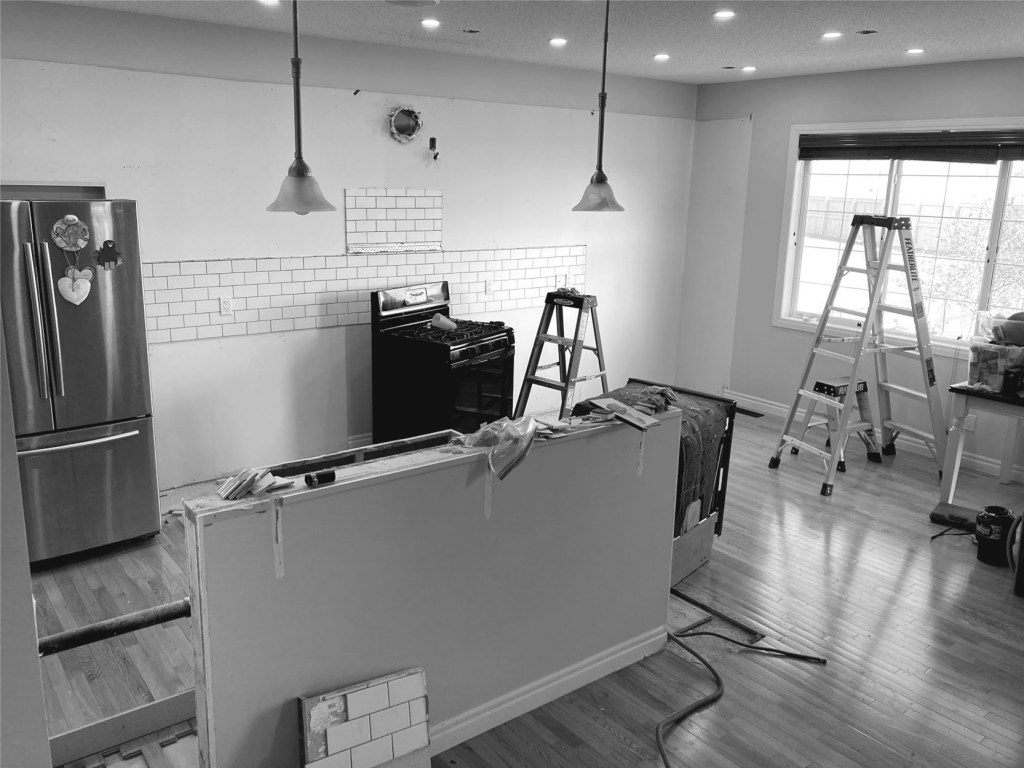
Our mortgage is higher and my energy is lower.
Our kids have grown, our business has grown, my waistline has grown.
And now with the Christmas season upon us, we are again striving to light the world in 25 ways for 25 days, but I have to confess – I am struggling to find the balance. I am struggling to focus primarily on the things that matter most this holiday season. I am struggling to know what to let go and what to let grow. To be honest, sometimes I know what things to let go but I have a hard time doing it . . . because it’s Christmas and I love all the things!
I saw a post on Facebook the other day that caused me to stop and reflect. It said,
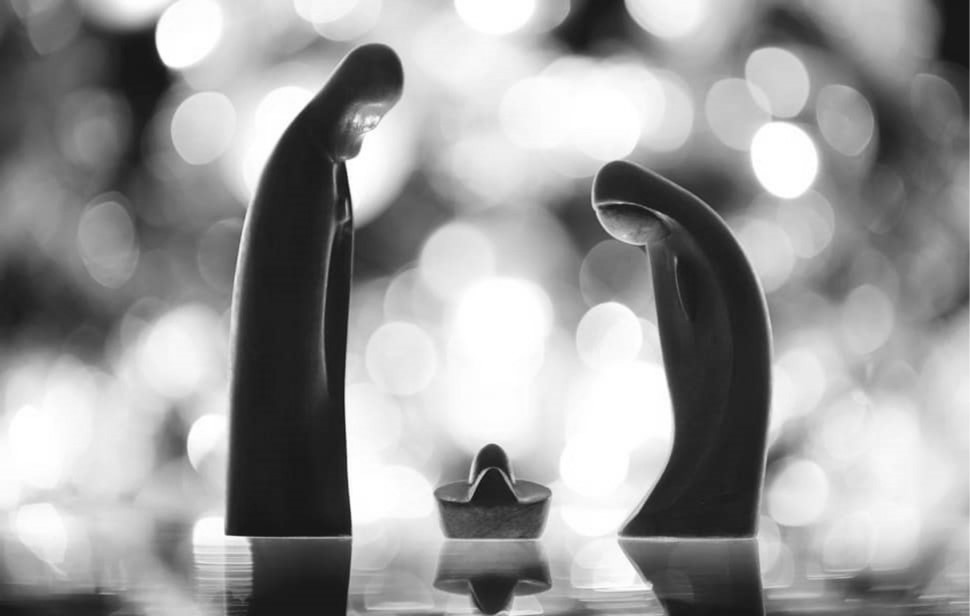
“The first Christmas was pretty simple, it’s okay if yours is too.”
My husband would be the first person to tell you I don’t do simple . . . in fact I have the gift of overcomplicating life down to a fine art. Sometimes I don’t think it’s such a bad thing – I love to make things special and magical and pretty, especially for my children. But I recognize that there is a unique joy that enters our life when we put the Lord and His will first.
I feel like the ability to find balance is a skill that might come easier to some than others – and I don’t want you to think for a minute I get it right even half of the time. But I am so thankful for those small consecrated moments when I actually do the best things over just the good and the better. For those times when I do let something go allowing room for other things to grow. And ultimately I am so grateful for the Savior and his example and ability to always do what matters most.
So this Christmas if you are up wrapping presents until 2:00 a.m. or baking 5 dozen cookies to give to your neighbors or stressing about finances and the cost of Christmas presents, I hope you’ll think of me (who will probably be doing the exact same thing) and know that you’re not the only one who struggles. But mostly I hope you’ll think of the Savior whose birth is the reason for all we do this time of year. Think of what He would want you to do and try to remember,
“In our efforts to do something or do anything, [especially at Christmas] we might ask ourselves, “What mattereth most?”



 Find Joy in the Ordinary